Afghani vs Turkish vs Iranian anjeer: which dried figs should you buy?
Where each grows, how they differ in size, texture and sweetness, and what matters more than origin.
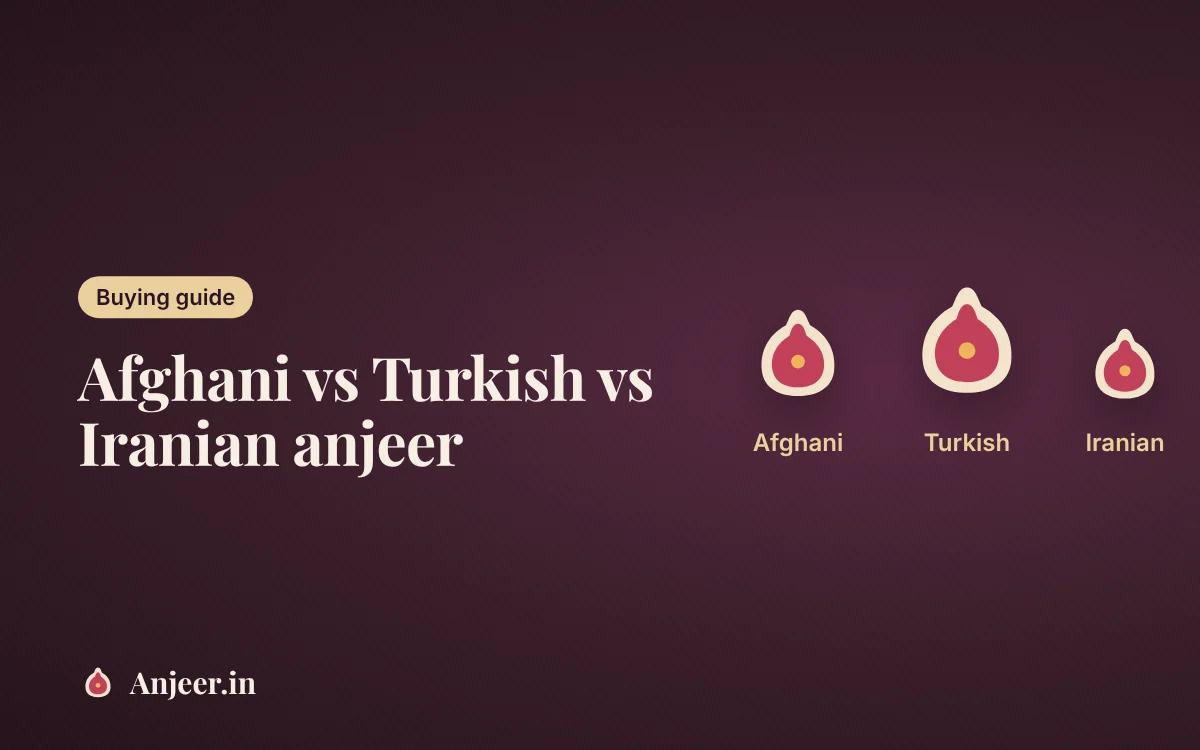
Turkish figs are usually the largest and softest, Iranian figs are small and very sweet, and Afghani figs sit in between, often sold strung on a thread. But origin matters less than three things you can check on any pack: size grade, freshness and whether the figs are untreated. Here is how the three compare.
At a glance
| Afghani | Turkish | Iranian | |
|---|---|---|---|
| Typical size | Medium to large | Large to very large | Small to medium |
| Texture | Chewy, meaty, pleasantly seedy | Very soft, plump | Firm to chewy |
| Taste | Honey-sweet | Mild, caramel-sweet | Intensely sweet |
| Colour | Light brown to amber | Golden to light brown | Pale to golden |
| Common form in India | Strung on a thread (mala) or loose | Loose or pressed in boxes | Loose or strung |
| Price in India | Mid to high | High | Low to mid |
These are general trade characteristics; individual lots vary a great deal within each origin.
Turkish anjeer
Turkey dominates world dried fig production, producing around 55–58% of the global crop in recent seasons. Almost all of it comes from the Büyük and Küçük Menderes river basins of the Aegean region, with Aydın province alone producing about 75% of Turkey's dried figs, and a single variety, Sarılop, making up about 90% (Turkish Ministry of Agriculture fig research report). Sarılop figs are large, thin-skinned and soft, which is why Turkish figs are often the plumpest on the shelf, and usually the most expensive.
Iranian anjeer
Iran's best-known dried figs come from Estahban in Fars province, where figs grow in rain-fed orchards without irrigation and are left to dry on the tree before they are collected (Estahban). The result is a small, dense, very sweet fig. Iranian figs are widely available in India at lower prices, and quality ranges from excellent to very dry.
Afghani anjeer
Afghanistan is a significant fig exporter, with India among its biggest buyers: Afghan chamber of commerce figures reported fig exports of almost $47 million over ten months, with India, the UAE, Canada and European countries the main markets (TOLOnews via Environmental Peacebuilding Association). In Indian markets, Afghani anjeer is often sold strung on a thread, with a chewy, meaty texture and a honey-like sweetness that soaks up water well overnight. That texture is a big reason it is the traditional choice for soaking.
Which is best for what?
- Daily soaking: Afghani or Turkish Jumbo grade; both soften well overnight.
- Eating as a snack: Turkish for softness, Iranian if you like it intensely sweet.
- Anjeer milk, barfi and cooking: medium grade of any origin works, and costs less.
- Gifting: the largest, most even grade you can find, whatever the origin.
What matters more than origin
A fresh, graded, untreated Iranian fig beats an old, mixed-size Turkish one every time. Before paying, check:
- Grade: are all figs the same size? Mixed sizes usually mean blended lots.
- Pack date: fresher is softer.
- Treatment: untreated figs are darker and uneven; a natural white sugar bloom is normal.
- Label: origin, lot number and FSSAI licence printed on the pack.
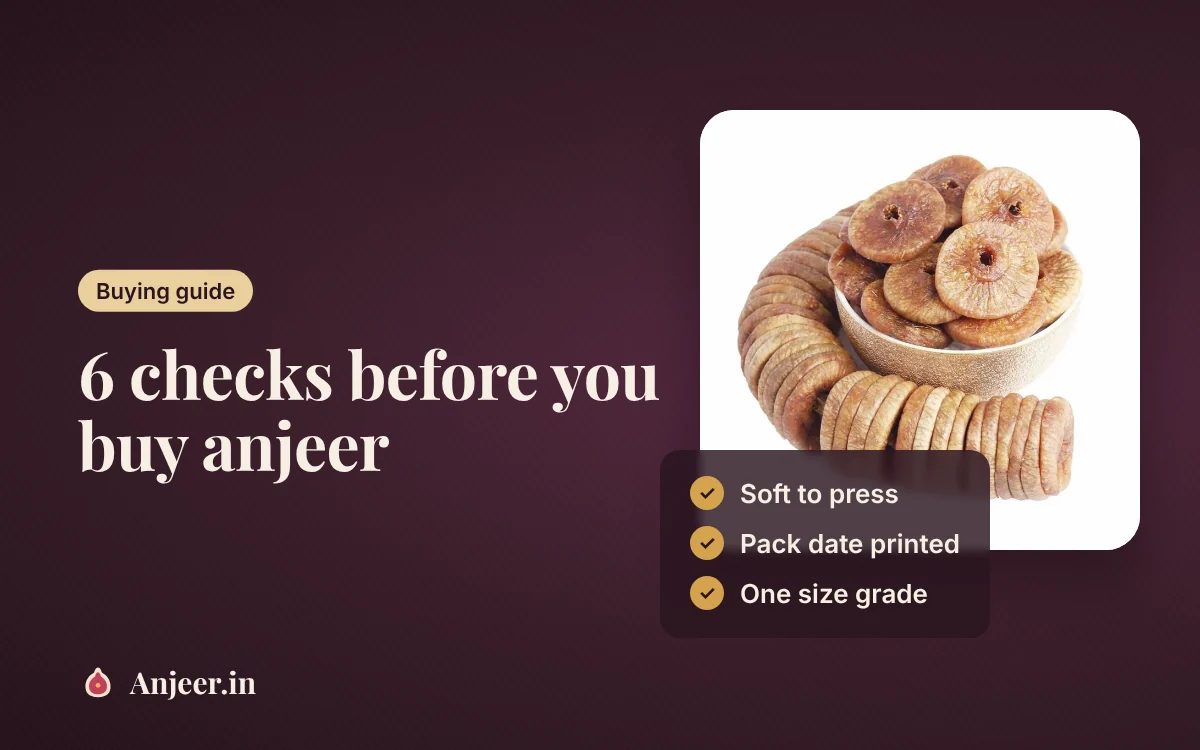
Our 6 checks before you buy anjeer walk through each one, and anjeer prices in India explains what each grade should cost.
Our anjeer
We sell Afghani anjeer graded by diameter, with one grade per pack and the origin, lot number and pack date printed on every pack. Our Jumbo 500 g (33–38 mm) is the size most families soak every night.
Frequently asked questions
Which is better, Afghani or Turkish anjeer?
Turkish figs are usually larger and softer; Afghani figs are chewier and honey-sweet and soak well overnight. Freshness, grading and being untreated matter more than origin.
Where do most dried figs come from?
Turkey produces around 55–58% of the world's dried figs, mostly from Aydın province in the Aegean region.
What are Iranian Estahban figs?
Small, very sweet dried figs grown in rain-fed orchards around Estahban in Fars province, Iran, and dried on the tree.
Why are Afghani anjeer sold on a thread?
Stringing figs on a thread for drying and selling is a traditional practice in the region; in India these are often called anjeer mala.
This article is general information, not medical advice. Talk to your doctor about any health condition.