Anjeer for weight loss (and weight gain): how to use it either way
Calories per fig, why the fibre matters, what the research shows, and how many to eat whether you want to lose or gain weight.
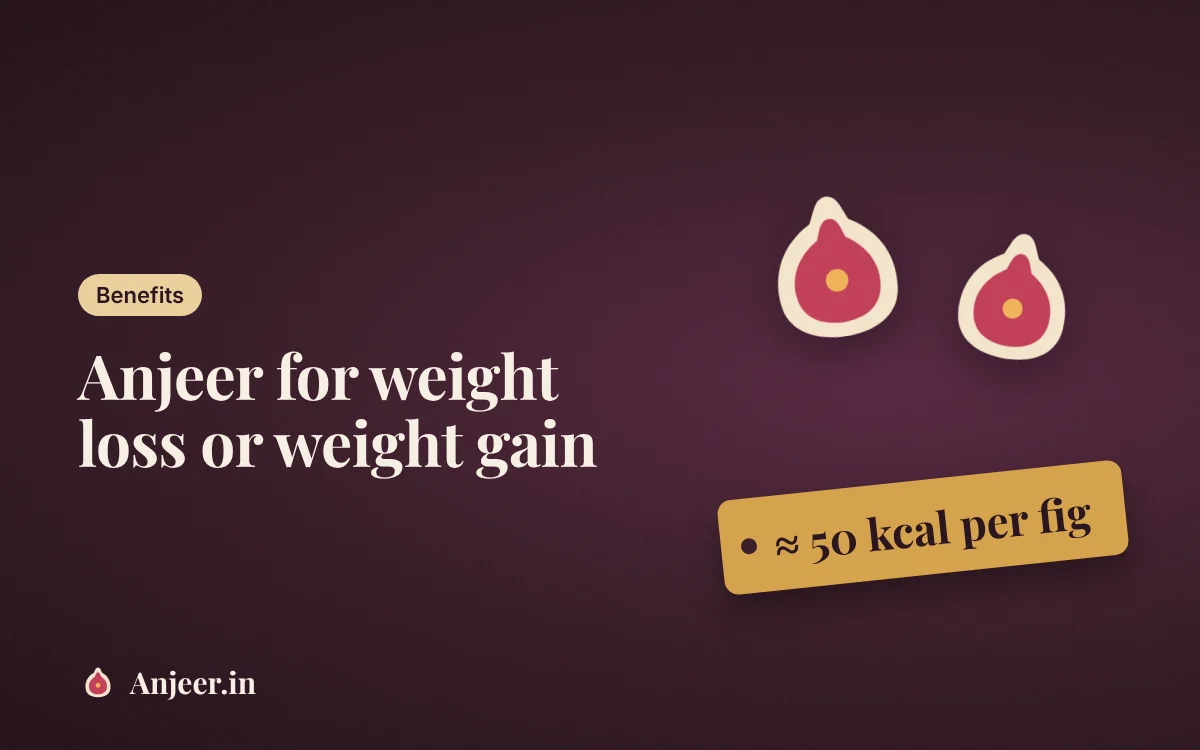
Anjeer can fit either goal, because what changes your weight is how many you eat and what they replace. Two or three figs in place of biscuits or mithai can help you eat less sugar and stay full longer. Five or six a day with milk and nuts adds useful calories if you are trying to gain. Nothing in a fig burns fat on its own.
How many calories are in anjeer?
Dried figs have about 249 kcal per 100 g (USDA). One of our Jumbo anjeer weighs about 20 g, so:
| Amount | Calories | Fibre |
|---|---|---|
| 1 Jumbo anjeer (about 20 g) | about 50 kcal | about 2 g |
| 2 anjeer | about 100 kcal | about 4 g |
| 3 anjeer | about 150 kcal | about 6 g |
| 6 anjeer | about 300 kcal | about 12 g |
That is calorie-dense for its size, which is why portions matter more with dried fruit than with fresh.
Why anjeer can help with weight loss
Fibre keeps you full. At 9.8 g of fibre per 100 g, dried figs are one of the higher-fibre dry fruits. Fibre slows digestion, so a couple of figs with nuts can carry you to the next meal better than a biscuit with the same calories.
It satisfies a sweet craving with fruit. Figs taste like a treat but contain no added sugar. Swapping a daily sweet for two figs is one of the easiest changes to stick with.
What the research shows: a large analysis of US national survey data found that adults who ate dried fruit had better diet quality and slightly lower body weight, BMI and waist size than those who did not (Keast and colleagues, Nutrition Research, 2011). It shows an association, not proof that dried fruit causes weight loss: people who eat dried fruit may simply eat better overall.
How to eat anjeer for weight loss
- Keep it to 2 a day, counted out, never eaten from the pack.
- Use it as a swap, not an addition: replace your afternoon biscuits, namkeen or a sweet.
- Pair it with protein or fat, such as 4–5 almonds or a bowl of curd, so it lasts longer.
- Morning soaked anjeer is an easy routine: see what soaked anjeer does.
- Avoid anjeer barfi, rolls and "fig bars" unless you have checked the label; many add sugar or jaggery.
How to eat anjeer for weight gain
If you are underweight or trying to build up after an illness, the same calorie density becomes useful:
- Have 4–6 anjeer a day, spread across meals.
- Drink anjeer milk at night: whole milk plus 2–3 figs.
- Make a fig and nut shake with milk, banana, figs and a spoon of peanut butter.
- Add chopped figs to porridge, oats or poha.
Increase slowly over a week or two, because a sudden jump in fibre can cause bloating.
Common mistakes
- Snacking straight from the pack. Six figs are 300 kcal before you notice.
- Treating it as a "fat burner". No single food does that. The benefit is the swap and the fullness.
- Ignoring sugar if you have diabetes. See anjeer and diabetes for safe portions.
Want to try the routine? Our Jumbo anjeer 250 g trial pack holds about 12 figs, almost a week of two a day.
Frequently asked questions
Is anjeer good for weight loss?
It can help when 2 figs replace a sweet or biscuit: the fibre keeps you full and there is no added sugar. Eating extra figs on top of your usual food will not cause weight loss.
How many calories are in one anjeer?
About 50 kcal for a Jumbo dried fig of around 20 g, based on USDA values of 249 kcal per 100 g.
How many anjeer should I eat a day to lose weight?
Two, counted out, ideally with a few nuts or curd and as a swap for another snack.
Can anjeer help me gain weight?
Yes, 4–6 a day with milk and nuts adds useful calories and fibre. Increase slowly to avoid bloating.
Does eating anjeer at night cause weight gain?
Timing matters less than the total. Two figs at night are the same 100 kcal as two figs in the morning.
This article is general information, not medical advice. Talk to your doctor about any health condition.